


Choosing an Acrylic Keychain Manufacturer: A Practical Guide for Artists
Quick Answer
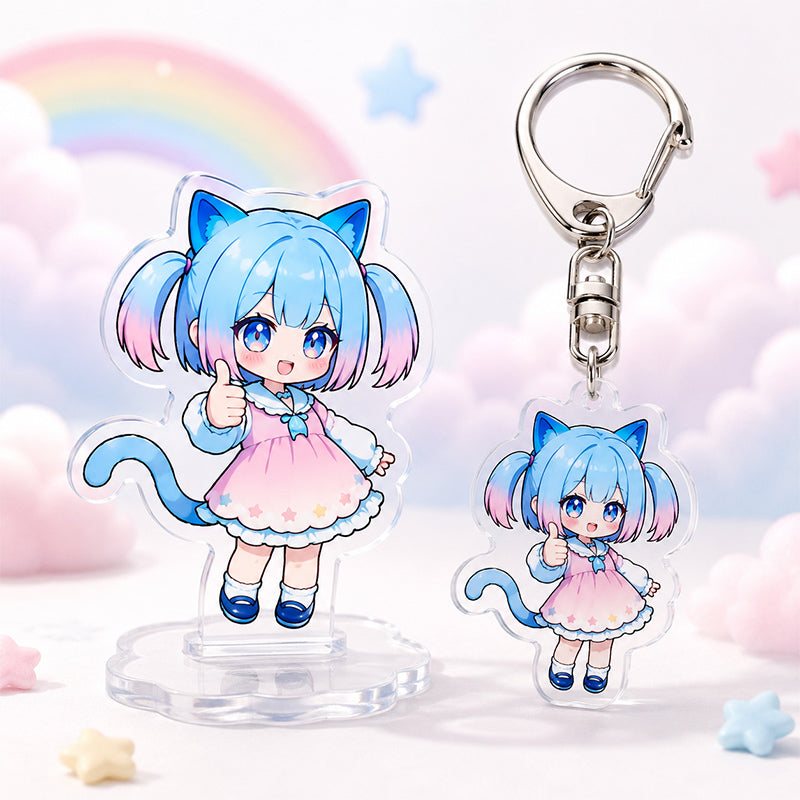
A good acrylic keychain manufacturer should do more than accept an image and print it. For an artist, Artist Alley seller or small merchandise brand, the manufacturer should be able to explain the available acrylic finishes, check the artwork, prepare a clear digital proof, control the cutline and white-ink layer, confirm the hardware and packaging, and state exactly how the minimum order quantity is calculated.
Before comparing quotations, send every supplier the same project information: finished size, number of designs, quantity per design, clear or special-effect acrylic, single- or double-sided printing, attachment style, packaging, destination and required date. This makes the comparison much more useful than asking only, “How much is a custom keychain?”
This guide focuses on the practical manufacturing questions artists can use when choosing a supplier. If you are still deciding between keychains, charms and display pieces, read the custom acrylic merch comparison guide first.

What Does an Acrylic Keychain Manufacturer Actually Handle?
The visible product may look simple, but several production decisions sit behind it. A manufacturer normally turns the submitted artwork into a printable file, creates or checks the cut path, manages the color and white-ink layers, prints the artwork, cuts the acrylic, adds the selected attachment and completes inspection and packing.
Depending on the project, the process may also include epoxy finishing, holographic material, suspended shaker pieces, glitter, printed backing cards, protective film instructions or individual retail packaging. Not every supplier performs every step in the same facility, so the important question is not whether a company calls itself a factory. It is whether the team can control the specifications that matter to your order and communicate what will happen at each stage.
Choose the Keychain Type Before Comparing Manufacturers
A manufacturer may be excellent at standard clear acrylic but have different minimums or production methods for holographic and shaker styles. Identify the intended product first so that you are comparing suppliers for the same job.
| Keychain style | Visual character | Useful for | Current Animepa starting MOQ |
|---|---|---|---|
| Clear acrylic | Clean transparent edge and a direct view of the printed artwork | Core collections, first product tests and regular restocks | 5 pieces per design |
| Holographic acrylic | Reflective rainbow effect that changes with the viewing angle | Special editions, bold artwork and convention displays | 20 pieces per design |
| Shaker or quicksand acrylic | Layered construction with moving decorative pieces or flowing effects | Premium launches, interactive designs and higher-value variants | 10 pieces per design |
These are current starting quantities for the listed Animepa product types, not a universal rule for every acrylic process. Size, construction and special accessories may affect the applicable minimum. For an unusual project, ask the supplier to confirm the MOQ against the final specification.
Start With a Complete Product Specification
Many quotation problems begin because “custom acrylic keychain” can describe several different products. A useful request should state:
- Finished height and width
- Number of artwork designs
- Quantity required for each design
- Clear, holographic, shaker or another acrylic effect
- Single-sided or double-sided printing
- Whether the reverse repeats the front or uses different artwork
- Preferred hole position and attachment
- Individual bag, backing card or other packaging
- Destination country and postal code
- Event date or required delivery date
When these details are missing, two suppliers may appear to offer very different prices while actually quoting different products. A precise brief lets you compare production quality, service and total cost more fairly.
How to Compare Acrylic Keychain Manufacturers
The lowest unit price is only one part of the decision. Artists often need a supplier that can support several designs, identify artwork problems before production and keep repeat orders visually consistent.
The U.S. International Trade Administration recommends evaluating a potential overseas partner’s history, resources, personnel, product line, facilities and samples when practical. For an artist, this means checking clear company information and relevant production examples instead of relying on a single promotional photo. For a broader sourcing checklist, see Animepa’s guide to sourcing custom anime merchandise from China.
| Check | What a useful answer looks like | Why it matters |
|---|---|---|
| Product range | The supplier explains which clear, holographic, epoxy and shaker options are currently available. | You can choose a process that suits the artwork instead of forcing every design into one format. |
| Artwork checking | The team checks resolution, transparency, cutline space, hole placement and small details. | A preventable file issue may otherwise appear only after the product is printed and cut. |
| Digital proof | The proof shows the cut path, print area, hole position, orientation and relevant front/back information. | You can approve the physical layout before production begins. |
| MOQ explanation | The quotation states whether the minimum is per design, size, material or accessory combination. | A headline MOQ is not useful if the order structure is unclear. |
| Quality control | The supplier can describe checks for printing, cutting, surface condition, hardware and quantity. | Small defects become noticeable when customers handle the keychain at a booth or receive it by mail. |
| Repeat-order records | The supplier can work from the approved specification and identify what must be reconfirmed for a restock. | Consistent size, color direction and attachments help a collection feel coordinated. |
Artwork Support Matters More Than It First Appears
An acrylic keychain manufacturer does not replace the artist, but a careful production team can identify technical issues that affect the finished product. The uploaded file should normally have enough resolution for the chosen size, a transparent background where appropriate and clear separation between artwork and any required cut path.
Adobe describes 300 PPI as a common target for high-quality printing unless the printer specifies a different requirement. Prepare artwork at its intended finished size rather than enlarging a small file at the last moment; the manufacturer can then confirm whether the resolution is suitable for its equipment and process.
Small text, thin lines, detached decorative elements and narrow gaps deserve special attention. A tiny star floating far from the character may create an awkward extension in the cutline. A very narrow strand of hair may not read as expected at keychain scale. The manufacturer should flag practical concerns without unnecessarily changing the character design.
Ask what file formats are accepted and whether the team will create the cutline or expects a separate layer. If you provide your own cut path, confirm the required spacing and stroke convention before preparing the full collection.
Understand White Ink and Transparent Areas
Artwork printed on clear acrylic usually needs a white-ink layer behind selected colors. Without that support, some printed areas may appear more transparent or less saturated than they did on a screen. This is not automatically a defect; transparent and semi-transparent effects can be part of the design.
Before approval, decide which areas should be:
- Fully opaque with white backing
- Printed color without full white backing
- Completely transparent
- Visible from both sides
A useful digital proof should make these choices understandable. When a design depends on stained-glass effects, translucent gradients or a clear window, explain the intention instead of assuming the manufacturer will interpret it from the artwork alone.
Pantone explains that color systems and reproduction methods vary across materials and production processes. A digital proof is therefore useful for checking layout, layers and production intent, but it may not reproduce every finished color exactly on a backlit screen. If a color is especially important, ask how the supplier prefers it to be specified and whether a physical sample is appropriate.
Check the Cutline, Hole Position and Hardware Together
The keychain is a physical object, so the cut shape and attachment affect both appearance and use. A hole placed too close to a delicate part of the illustration may make the top feel crowded. A heavy decorative clasp can overpower a small charm, while an undersized ring may not suit the intended bag or display use.
During proofing, check:
- Whether the border around the artwork is visually balanced
- Whether small projections are strong enough for normal handling
- Whether internal gaps are cut or printed
- Where the hole sits relative to the character’s head, accessory or logo
- Whether the front faces the correct direction after the clasp is installed
- Whether the selected attachment matches the product photo and quotation

MOQ Should Be Explained, Not Just Advertised
MOQ means minimum order quantity, but the number needs context. Ask whether it applies per artwork design, per finished size, per material, per printing method and per hardware combination. A supplier may allow several designs in one order while still applying production requirements to each specification.
For artists testing a new collection, lower quantities can reduce inventory risk and make it easier to compare several characters. However, a complex special-effect product may require a higher starting quantity because of its material or assembly process. The best option is not always the lowest MOQ; it is the lowest practical quantity for the exact product you plan to sell.
When requesting a quote, use a design breakdown such as “six designs, five pieces per design, all 70 mm clear acrylic with the same clasp.” This is clearer than saying “30 keychains” and lets the supplier confirm whether the designs can share the same order conditions.
Digital Proof, Sample or Direct Production?
A digital proof is useful for checking layout, but it cannot fully show the feel of the acrylic, the movement of a shaker product or every color difference between a monitor and printed material. A physical sample becomes more valuable when the order is large, the structure is unusual, the color is especially sensitive or the product will be used as a long-term retail item.
For a small standard clear-acrylic run, some artists may choose to approve a detailed digital proof and proceed directly to production. For a premium launch or unfamiliar process, sampling can provide additional confidence. Ask how sample charges, revision rounds and sample shipping affect the schedule.
Evaluate Print and Cutting Quality
Inspection should focus on the product customers will actually receive, not only the supplier’s best promotional photo.
ISO’s overview of quality assurance emphasizes consistent processes and addressing the causes of recurring problems. This does not mean that every suitable supplier must hold a particular ISO certification. It means the supplier should be able to explain how it checks production, records issues and reduces the chance of the same defect appearing again.
| Inspection point | What to look for | Useful confirmation |
|---|---|---|
| Printed artwork | Readable facial details, controlled white backing and consistent orientation | Approve the production proof at the intended finished size. |
| Cut edge | A clean outline without obviously rough or unintended shapes | Review narrow points and complicated silhouettes carefully. |
| Surface | Appropriate protection from scratches during packing and transport | Ask whether protective film is present and how customers should remove it. |
| Attachment | Correct clasp, secure connection and consistent assembly | Put the hardware name or reference photo in the approved specification. |
| Quantity and packing | Correct count by design, separated products and suitable protective packing | Provide a design-and-quantity list that can be checked before shipment. |
Packaging Can Change the Quote
A simple individual bag is different from a printed backing card, branded insert, retail box or preassembled display package. If you sell at Artist Alley, you may prefer compact packaging that is easy to transport and quick to hand to customers. An online shop may need stronger protection and scannable product labels.
Tell the manufacturer whether the packaging is for convention sales, wholesale delivery, online fulfillment or a subscription box. This helps the supplier quote the correct materials and labor instead of adding packaging after the product price has already been compared.
Compare Total Project Cost, Not Only Unit Price
A low unit price may exclude hardware upgrades, proofing, backing cards, sample delivery or international shipping. A higher-looking quotation may already include services you would otherwise purchase separately.
For each supplier, compare:
- Product subtotal
- Setup or artwork-preparation charges
- Sample cost
- Attachment upgrades
- Packaging cost
- Shipping and available delivery methods
- Import-related costs that may apply at the destination
- Payment fees and currency
For a large order, request a separate quotation rather than multiplying a small-order listed price. Quantity, packing method and shipping plan may change the overall calculation.
Plan the Timeline Backward From Your Event
An Artist Alley deadline should include more than production time. Allow time for artwork preparation, quotation, proof review, possible revisions, sampling when needed, production, inspection, packing and shipping. International delivery also needs a buffer for circumstances outside the factory’s direct control.
Send the event date when requesting a quote, but distinguish it from the preferred arrival date. Receiving the products several days before travel gives you time to count stock, photograph the collection, prepare prices and resolve small packing issues.
A Practical Quote Request Template
You can copy this structure when contacting an acrylic keychain manufacturer:
Product: Clear acrylic keychain
Finished size: 70 mm on the longest side
Artwork: Six designs
Quantity: Five pieces per design
Printing: Double-sided, different artwork on front and back
Attachment: Please quote the selected clasp shown in the reference image
Packaging: Individual clear bag
Destination: Country and postal code
Required arrival date: Date
Files: Artwork attached; please advise whether a separate cutline layer is required
Replace the example specifications with your own. The purpose is to give every shortlisted supplier the same information.
Questions to Ask Before Approving Production
- Is the quoted MOQ per design, size and material?
- What exact acrylic effect and attachment are included?
- Will I receive a digital proof before production?
- Does the proof show the cutline, hole position and front/back orientation?
- How are transparent areas and white ink handled?
- What happens if the artwork needs a technical adjustment?
- Is protective film used, and will the customer need removal instructions?
- What packaging is included?
- How are different designs counted and separated?
- What production and shipping assumptions are included in the estimated schedule?
Working With Animepa
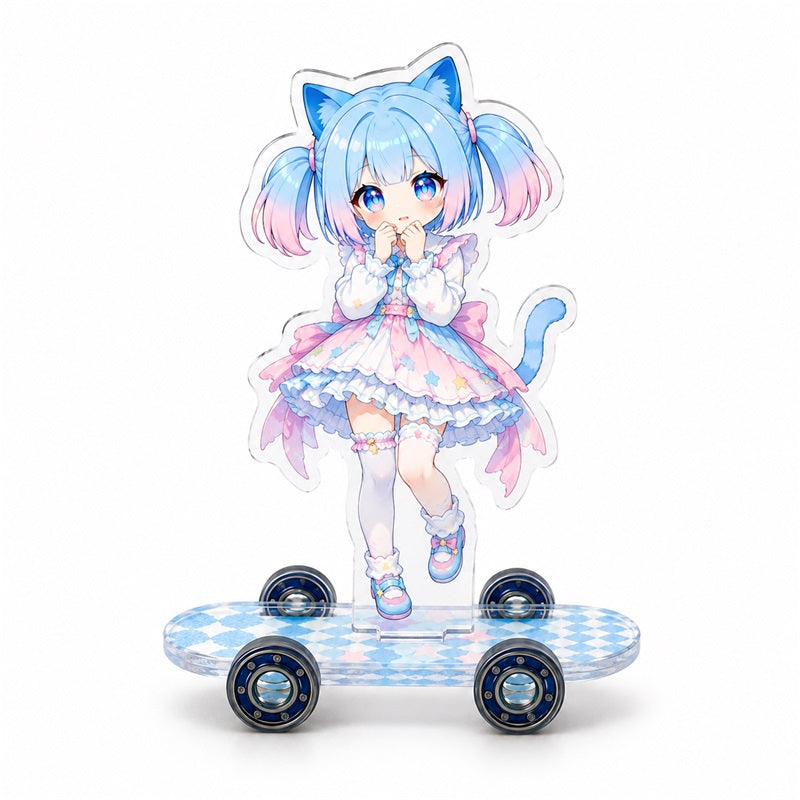
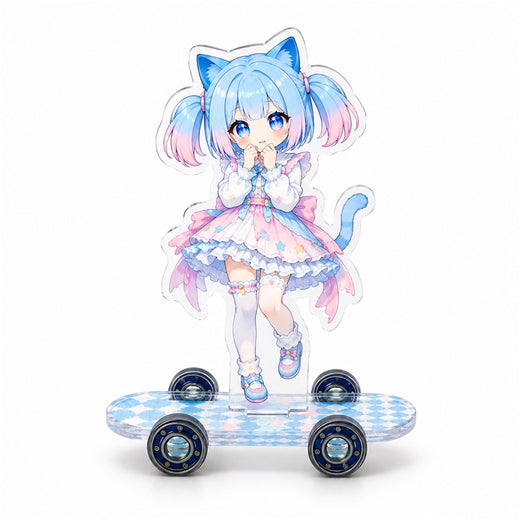
Animepa supports independent artists, Artist Alley sellers, VTubers, online shops and brands with factory-direct custom merchandise production. Current acrylic options include standard clear keychains, holographic styles, shaker or quicksand constructions, charms and standees. Many standard products support low-quantity testing, while special effects use product-specific starting quantities.
You can browse the custom acrylic keychain collection or view the wider custom acrylic product range. For information about the factory, production capabilities and service process, visit About Animepa. You can also review common ordering and production questions on the Animepa FAQ page.
To request a current quotation, send the artwork count, finished size, quantity, acrylic style, attachment, packaging, destination and required date through the contact page. The team can check the files, clarify the applicable MOQ and recommend the next practical production step.
Frequently Asked Questions
How do I find an acrylic keychain manufacturer for artists?
Look for a supplier that already handles illustrated character merchandise, provides digital proofs, explains cutlines and white ink, offers suitable attachments and clearly states how MOQ works for multiple designs. Compare the same specification across suppliers rather than comparing headline prices alone.
What should I send to get custom acrylic keychains made?
Send the artwork, target finished size, number of designs, quantity for each design, desired acrylic finish, print sides, attachment, packaging, destination and required date. Ask whether the manufacturer needs a separate cutline or white-ink layer.
What is a reasonable MOQ for custom acrylic keychains?
MOQ varies by manufacturer and process. At Animepa, the current starting MOQ is 5 pieces per design for standard clear acrylic keychains, 20 pieces per design for holographic acrylic and 10 pieces per design for shaker or quicksand styles. Confirm the applicable minimum for the exact size and construction before ordering.
Should I order a sample first?
A sample is especially useful for a large order, unfamiliar finish, color-sensitive project or complex shaker construction. For a small standard order, an artist may decide that a detailed digital proof provides enough information. The appropriate choice depends on the product and risk level.
Can a manufacturer help prepare the cutline?
Many manufacturers can create or check a cutline from suitable artwork, but the service and file requirements vary. Ask before preparing every design so the border spacing, hole position and layer structure follow the supplier’s production method.
How much should artists charge for acrylic keychains?
There is no universal selling price. Consider the landed product cost, event fees, packaging, payment fees, taxes where applicable, design time, audience expectations and the value of the artwork. Compare similar products in your actual sales channel, then choose a price that supports both the business and future restocks.
Choose a Manufacturer That Fits the Collection
The most useful acrylic keychain manufacturer is not simply the company with the longest product list or the lowest displayed price. It is the supplier that can translate your artwork into a consistent physical product, explain the production choices, catch practical file issues and support the quantity and schedule your collection actually needs.
Start with one complete specification, compare answers carefully and approve the proof at the intended finished size. A clear process makes the first order easier to review and gives future restocks a stronger reference point.


Dejar un comentario