


How to Launch Custom Anime T-Shirts with Low-MOQ Production
Apparel can turn artwork into something customers wear repeatedly, but it introduces decisions that keychains and prints do not: garment size, front and back placement, seams, color coverage and inventory allocation.
A successful custom anime T-shirt launch therefore begins with a smaller, well-planned product range. This guide explains how to prepare an all-over-print shirt, choose size quantities and use low-MOQ production to test a creator apparel line.
Animepa’s current custom anime graphic T-shirt supports full-color sublimation artwork and sizes from S through 5XL.

Choose the type of shirt design
Not every illustration needs the same layout.
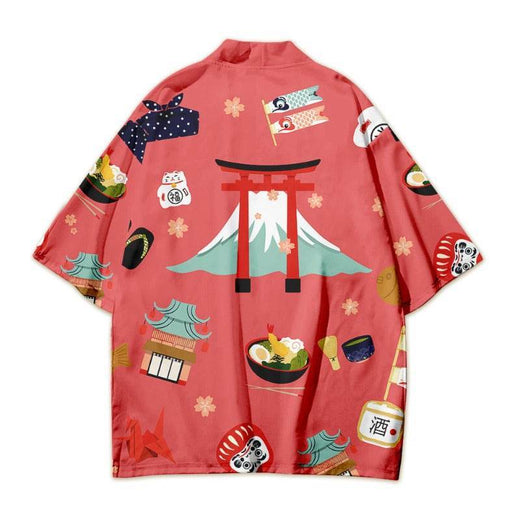
All-over character artwork
Use the shirt panels as a large canvas. This works well for character collections, detailed backgrounds and coordinated front-and-back compositions.
Repeat-pattern apparel
Create a pattern from mascots, icons, symbols or small character poses. Repeat patterns can feel more wearable while still carrying a recognizable creator style.
Focused front or back composition
Keep one strong focal area and use supporting colors or motifs across the rest of the shirt.
Coordinated collection shirt
Reuse a visual system—logo position, background treatment and typography—while changing the featured character.
The best choice depends on whether customers want statement apparel, everyday fandom clothing or a collectible convention release.
Prepare artwork for garment panels
An all-over-print shirt is not a flat rectangle. Front, back, sleeves and collar areas are assembled into a garment.
Use the product template and check:
- Front and back orientation
- Sleeve artwork
- Seam transitions
- Collar and edge areas
- Important facial features
- Text placement
- Bleed around panel boundaries
Avoid placing a face, small logo or important text directly across a seam. Patterns can cross panel boundaries more easily than precise character details.
Animepa can provide a template and digital mockup before production. Review each garment panel rather than approving only a front-view preview.

Use sublimation artwork appropriately
The current product uses full-color sublimation printing. This process is suitable for:
- Gradients
- Detailed anime illustrations
- Edge-to-edge backgrounds
- Multi-color patterns
- Front, back and sleeve coordination
Screen colors and printed fabric colors are not identical. Very dark areas, fluorescent-looking screen colors and subtle shadow details should be reviewed in the mockup or sample.
The exact fabric specification should always be confirmed for the selected shirt before final pricing. Do not assume that every custom T-shirt in a broader apparel collection uses the same material or printing process.
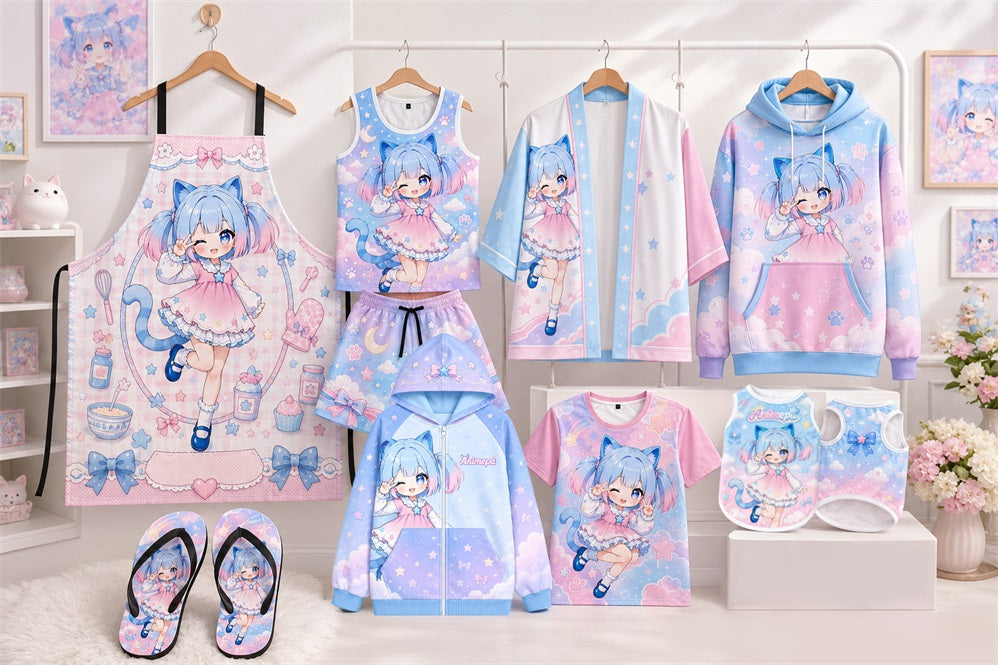
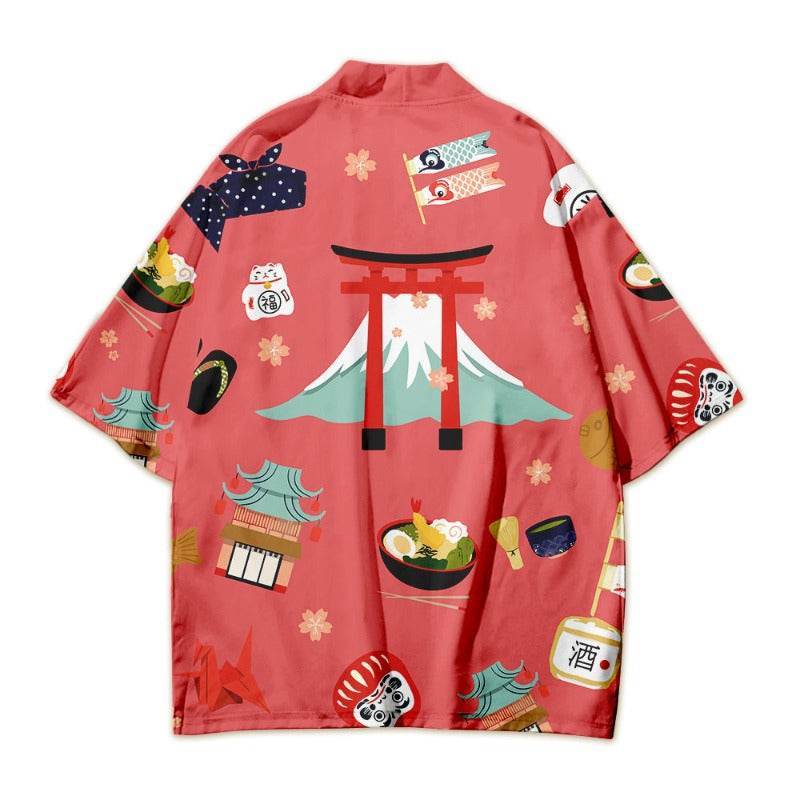
Browse the custom anime apparel collection to compare T-shirts, hoodies, haori and other clothing.
Plan sizes before planning designs
The current shirt offers sizes S, M, L, XL, 2XL, 3XL, 4XL and 5XL.
Apparel inventory has two dimensions:
- Artwork design
- Garment size
If you launch four designs across eight sizes without a plan, the number of combinations grows quickly. Start with audience information from previous orders, convention sales or preorder surveys.
For a first launch:
- Use fewer artwork designs
- Concentrate inventory in the sizes your audience requests most
- Keep a small number of additional sizes
- Record sales by both design and size
- Consider preorders for less predictable size combinations
Do not describe a shirt as unisex or promise a particular fit unless the selected product’s size chart confirms it. Publish the actual garment measurements and explain how customers should compare them.
How low MOQ works with multiple designs
Many regular Animepa products start from five pieces where applicable. Multiple artwork designs can share the same-product total without each design meeting another five-piece minimum.
However, apparel needs extra planning because sizes are part of the product specification. Before assuming that every design and size can be mixed freely, send the exact allocation for confirmation.
Example inquiry:
Please quote 20 units of the same custom anime T-shirt. We have four artwork designs and need sizes S–2XL. Attached is the design-and-size quantity table.
Different product categories cannot be combined to reach one MOQ. T-shirts, hoodies and haori are separate products even when they share the same artwork.
Build an apparel launch around demand
Step 1: Select one shirt format
Avoid launching several garment constructions at the same time unless you already have reliable apparel demand.
Step 2: Choose a small design series
Use related artwork so the collection looks intentional.
Step 3: Prepare a size survey or preorder
Ask customers which size and design they would purchase, not only which artwork they like.
Step 4: Confirm a representative sample
Use the sample to evaluate print placement, garment measurements, color and how the shirt photographs.
Step 5: Produce the test run
Track design, size and sales channel separately.
Step 6: Reorder proven combinations
Do not reorder every design and size equally. Use actual sales data.
Price shirts using the complete cost
Include:
- Product cost
- Sample or setup costs
- Packaging
- Shipping and import costs
- Payment and platform fees
- Convention costs
- Allowance for exchanges or defects
A shirt can have a higher selling price than a charm, but it also uses more storage space and creates size-related inventory risk. Calculate margin after all costs rather than comparing retail price with product price alone.

Custom anime T-shirt FAQ
What sizes are available?
The current referenced product offers S through 5XL. Use the current size chart when preparing a listing.
Can I print the front, back and sleeves?
The product supports all-over artwork. Confirm the printable template for each panel and keep critical details away from seams.
Can I mix several designs?
Multiple designs can share the total MOQ for the same product, but provide a complete design-and-size allocation for confirmation.
Should I claim the print will never fade?
No printed garment should be promoted with an absolute lifetime claim. Provide appropriate care instructions and describe the printing process accurately.
If you are comparing apparel with bags, pillows and other functional merchandise, the high-margin lifestyle products guide provides a broader product-planning framework.
Start with a focused apparel collection
Animepa supports artists, Artist Alley sellers, VTubers, online shops and brands with templates, mockups, sample options, low-MOQ manufacturing, quality checks and worldwide shipping.
View the custom anime T-shirt, explore more custom apparel, or contact Animepa with your artwork, size allocation and deadline.


Laissez un commentaire